

Lesson 12 of 55
Writing good prompts
The anatomy of a request that gets sharp, reliable results — the biggest lever you have.
If you take one thing from this handbook, make it this chapter. The difference between a vague answer and a genuinely useful one is almost never the model — it's the prompt. And a strong prompt isn't an art; it has four parts.
The four parts of a strong prompt
A request that lands almost always names all four:
- Role / perspective — whose side are you on? "As the receiving party", "acting for the lender". This changes which terms even count as risky.
- Task — the one clear verb: review, redline, draft, compare, summarize.
- Context — the specifics that matter: jurisdiction, deal size, your risk tolerance, the counterparty's leverage.
- Format — how you want it back: a table, grouped by severity, a three-line summary, a clause with a one-line rationale.
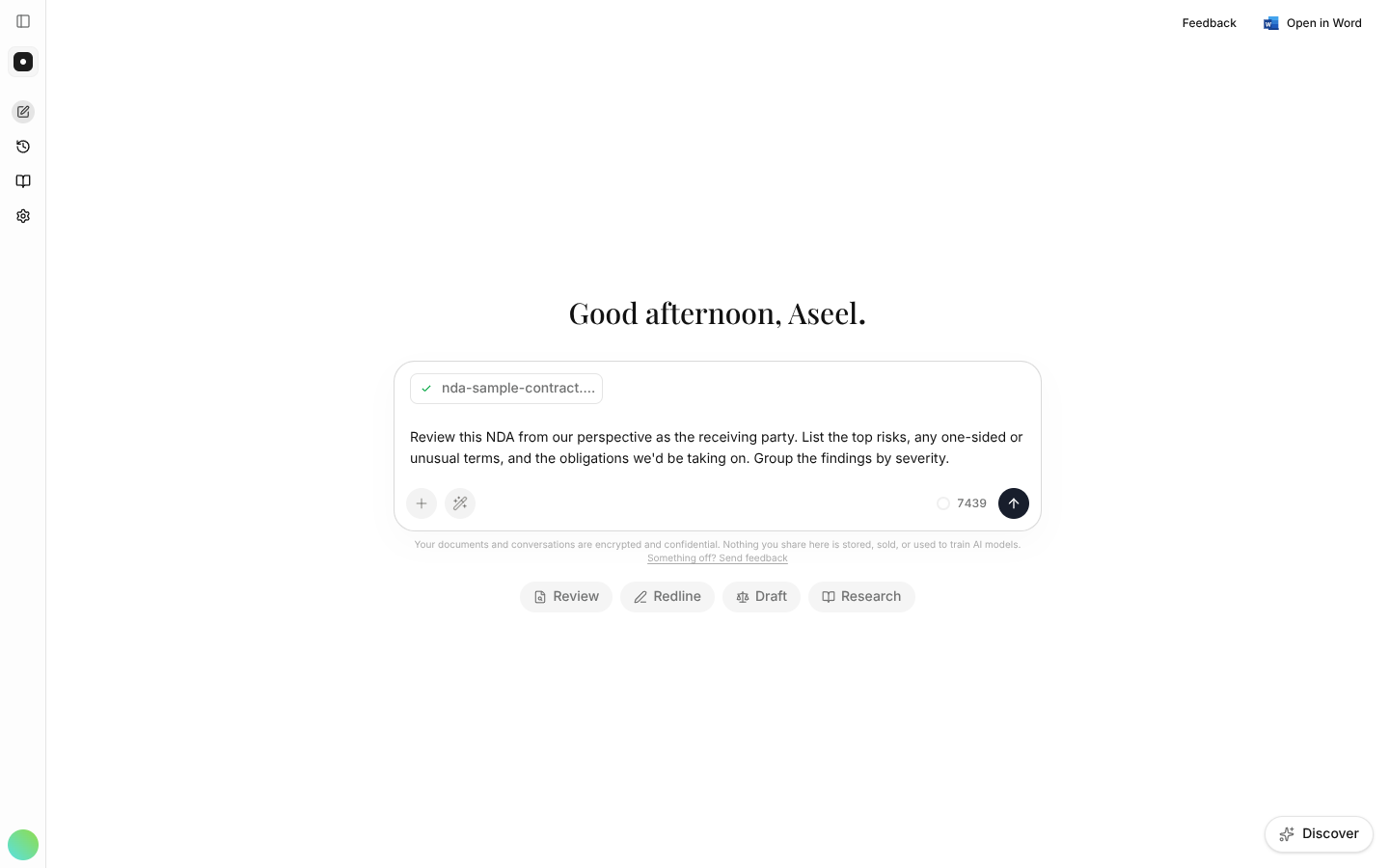
Weak versus strong
Weak: "Review this."
Strong: "Review this SaaS agreement as the customer. List the top risks and any uncapped liabilities, grouped by severity, as a table. We're a mid-market buyer with moderate leverage."
Habits that compound
- Iterate. Treat the first answer as a draft and refine it with follow-ups, in the same conversation.
- Ask it to show its work. "Show the exact wording you based that on" — then verify.
- Save what works. A prompt that reliably delivers belongs in a playbook.
The next two lessons go deeper on the two parts people most often skip: the perspective and the format.